Is Your Brain Overthinking the NREMT Exam? Here's How to Outsmart It

Overthinking is one of the fastest ways to lose points on the NREMT exam. It doesn’t matter how strong your knowledge is. If your mind starts adding details that aren’t in the question, second-guessing clear answers, or spiraling after a tough scenario, your performance drops.
The frustrating part is that most students don’t even realize it’s happening. They assume they’re being careful, when in reality they’re slowing down, confusing themselves, and drifting away from clinical judgment.
The NREMT isn’t built to reward over-analysis. It’s designed to evaluate how you think under pressure and how well you make safe, timely decisions. That means controlling your mental process is just as important as mastering content.
Why Overthinking Happens on the NREMT Exam
Overthinking usually comes from pressure, not lack of knowledge. The NREMT is a high-stakes, computer-adaptive exam, and that alone creates mental tension.
When questions get harder, many candidates assume they’re failing. In reality, increasing difficulty often means you’re performing well, since the test adjusts to your level.
This misunderstanding triggers anxiety, which leads to:
· Re-reading the same question multiple times
· Adding assumptions not stated in the scenario
· Changing correct answers to incorrect ones
· Losing focus on what the question is actually asking
At that point, it’s no longer a knowledge issue. It’s a thinking problem.
The Hidden Cost of Mental Overload
Your brain has limited working capacity during a timed exam. When you overthink, you overload that system.
Instead of focusing on:
· The patient’s condition
· The priority problem
· The next correct action
You start juggling unnecessary thoughts like:
· “What if I missed something?”
· “What if there’s a trick?”
· “What would I do in real life?”
This creates what many instructors call “analysis paralysis,” where too much thinking leads to worse decisions.
The key is not to think more. It’s to think more efficiently.
Strategy 1: Anchor Yourself to the Question, Not Your Imagination
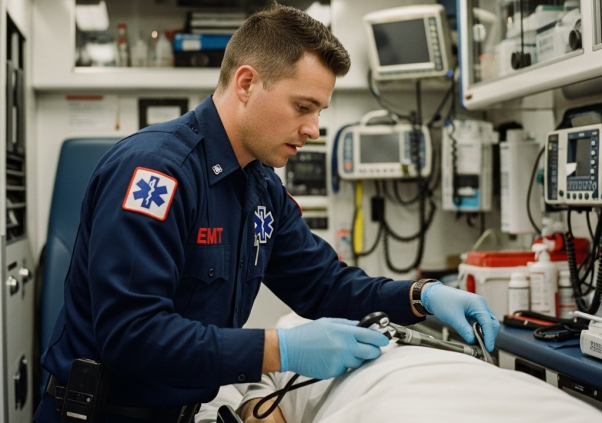
The NREMT exam gives you exactly what you need. Nothing more, nothing less.
If the scenario doesn’t mention a symptom, don’t assume it exists. If it doesn’t say the scene is safe, you should question that. If it asks for the “first” action, don’t jump ahead.
Train yourself to:
· Stick strictly to the information provided
· Avoid creating backstories
· Focus only on what’s being asked
This alone eliminates a huge percentage of overthinking errors.
Strategy 2: Use Structured Thinking, Not Emotional Thinking
When pressure rises, your brain shifts into emotional mode. That’s when mistakes happen.
Replace that with a simple mental framework:
· What is the main problem?
· Is this airway, breathing, or circulation?
· What needs to happen right now?
This keeps your thinking grounded in clinical priorities instead of panic.
The exam is not testing creativity. It’s testing consistency and safe decision-making.
Strategy 3: Control Your Timing to Control Your Thoughts
Overthinking often shows up as spending too long on one question.
A practical approach:
· Aim for about 30–60 seconds per question
· If you’re stuck, eliminate wrong answers
· Make a reasonable choice and move forward
Spending several minutes on one question drains mental energy and affects the next ones.
Momentum matters more than perfection.
Recommended: Time Management Strategies for the NREMT Exam
Strategy 4: Stop Changing Answers Without a Clear Reason
One of the most common mistakes is switching answers after second-guessing.
Your first choice is usually based on pattern recognition and training. Changing it often means you’ve started overanalyzing or introducing doubt.
Only change an answer if:
· You clearly misread the question
· You overlooked a key detail
Otherwise, trust your initial reasoning.
Strategy 5: Reset Between Questions
Carrying frustration from one question into the next is a silent score killer.
The NREMT is a one-question-at-a-time exam. Once you move on, that question is gone. Thinking about it only reduces your focus on the current one.
A simple reset method:
· Take a quick breath
· Refocus your eyes
· Treat the next question as completely new
This keeps your mental clarity intact throughout the test.
Strategy 6: Manage Anxiety Before It Becomes Overthinking
Overthinking is often just anxiety in disguise.
Simple techniques can prevent it from escalating:
· Deep breathing helps calm your nervous system and improve focus
· Mindfulness keeps your attention on the present question instead of future outcomes
· Positive self-talk reduces doubt and builds confidence
You don’t need to eliminate stress completely. You just need to keep it from taking over your thinking.
Strategy 7: Accept That You Won’t Know Everything
Trying to get every question right is what fuels overthinking.
The NREMT exam doesn’t expect perfection. It evaluates whether you meet a safe, competent standard.
That means:
· You will see questions you don’t fully understand
· You will make educated guesses
· You will feel unsure at times
That’s normal. High-performing candidates experience the same thing. The difference is they stay composed and keep moving.
Final Thoughts: Train Your Thinking, Not Just Your Memory

If you feel like your brain is working against you during the NREMT exam, it’s not a lack of knowledge. It’s a lack of control over your thought process.
Overthinking doesn’t mean you care more. It means your mental system is overloaded.
The goal is simple:
· Stay focused on the question
· Follow a structured approach
· Make clear, timely decisions
Preparation should reflect that.
That’s where platforms like How To NREMT come in. They focus on clinical judgment, scenario-based thinking, and exam strategy through a multi-step training plan, helping students prepare the way the test actually works.
If you want to stop overthinking and start answering with confidence, explore their full-access membership.


Comments
Post a Comment